HR System Implementations
HR system implementations are the process of introducing a digital HR platform into an organisation in a way that is secure, compliant, and fully adopted by users. While HR systems are often selected for their features, success depends on how well the system is implemented, governed, and embedded into everyday HR and management processes.
What are HR system implementations?
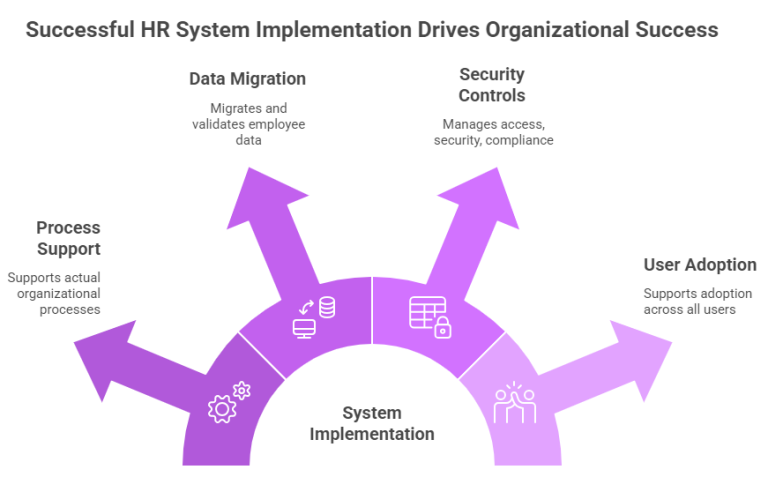
HR system implementations involve planning, configuring, deploying, and embedding an HR system so it supports how an organisation actually works.
This typically includes:
- Defining requirements and success criteria
- Configuring the system to match organisational processes
- Migrating and validating employee data
- Managing access, security, and compliance controls
- Supporting adoption across HR, managers, and employees
An implementation is complete only when the system is used consistently and reliably, not just when it is technically live.
Why do HR system implementations matter?
HR systems hold sensitive employee, contractual, and compliance-critical data. Poor implementation creates operational risk that extends beyond HR.
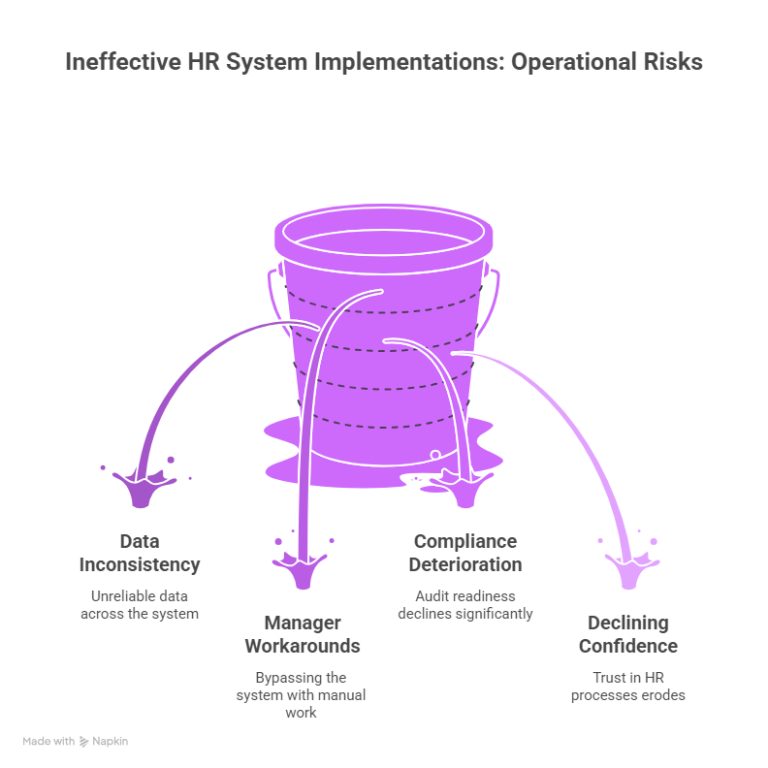
When HR system implementations are ineffective:
- Data becomes inconsistent or unreliable
- Managers bypass the system with manual workarounds
- Compliance and audit readiness deteriorate
- Confidence in HR processes declines
A well-implemented HR system supports governance, consistency, and trust across the organisation.
How do HR system implementations fail in practice?
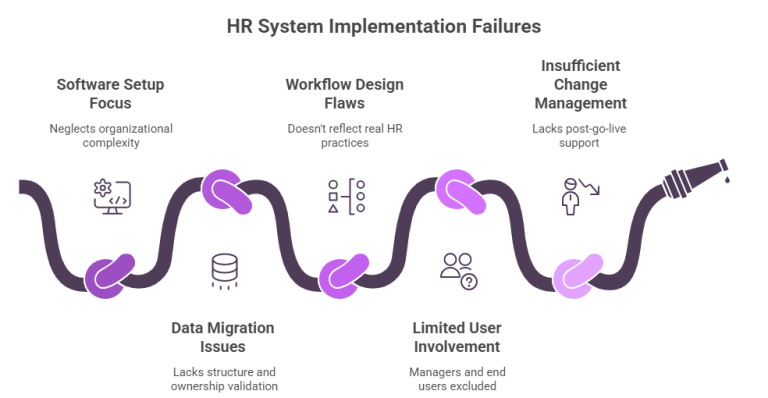
HR system implementations often fail due to underestimating organisational complexity rather than technical difficulty.
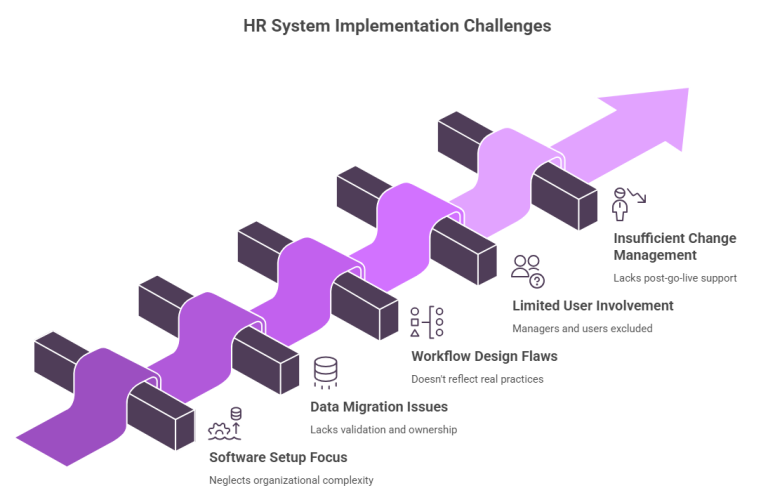
Common failure patterns include:
- Treating the implementation as a software setup exercise
- Migrating data without validating structure or ownership
- Designing workflows that do not reflect real HR practices
- Limited involvement from managers and end users
Insufficient change management and post-go-live support.
What role do governance and change play in HR system implementations?
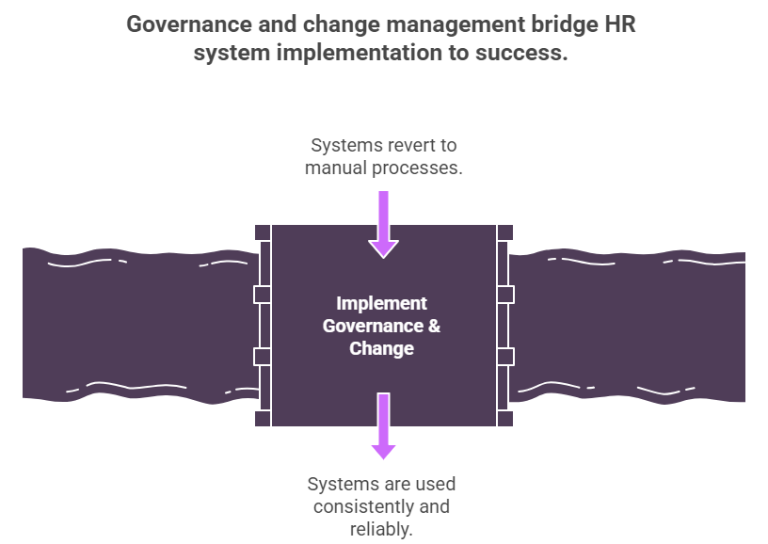
Governance and change management are central to successful HR system implementations.
Governance ensures:
- Clear ownership of HR data and decisions
- Defined access and approval structures
- Alignment with regulatory and organisational requirements
Change management ensures:
- HR teams, managers, and employees understand new processes
- Adoption is supported beyond initial training
- New behaviours are reinforced consistently
Without governance and change, HR systems often revert to parallel manual processes.
Common mistakes organisations make when implementing HR systems
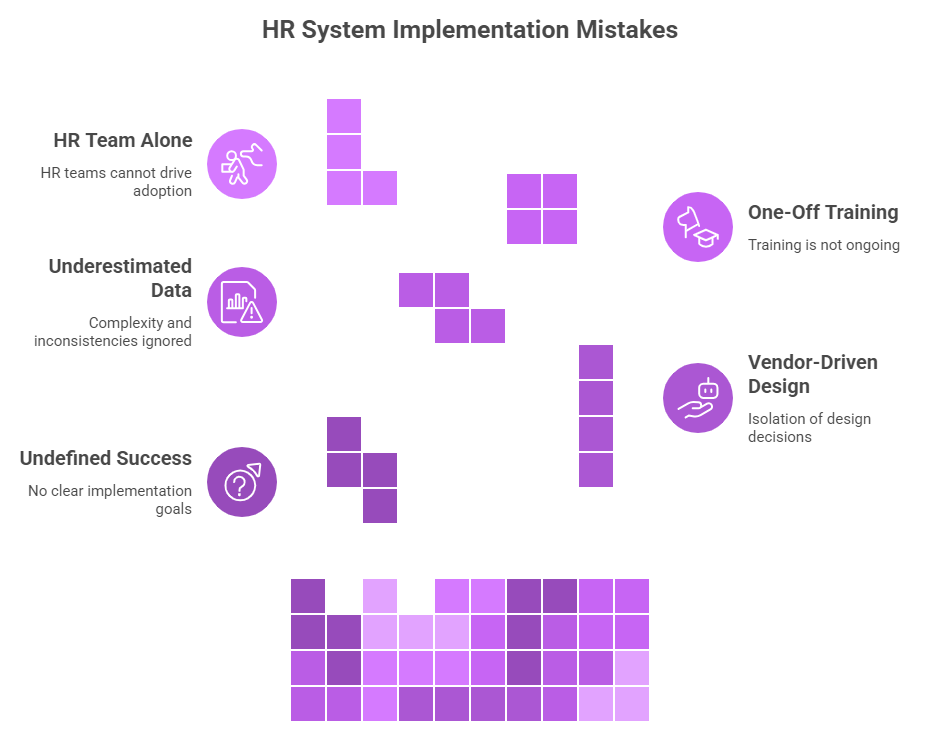
Organisations frequently repeat the same mistakes during HR system implementations:
- Selecting a system without defining implementation success
- Allowing vendors to drive design decisions in isolation
- Underestimating data complexity and historical inconsistencies
- Treating training as a one-off activity
- Assuming HR teams alone can drive adoption
These mistakes reduce long-term value and increase operational risk.
When are HR system implementations most challenging?
HR system implementations become more challenging when organisations are experiencing:
- Rapid growth or restructuring
- Increased regulatory or audit scrutiny
- Decentralised or multi-location teams
- Legacy systems and spreadsheet-based processes
- Limited internal HR capacity
In these contexts, structured implementation and governance are essential.
What does effective HR system implementation look like?
Effective HR system implementations are:
- Planned with clear outcomes and ownership
- Integrated with governance and compliance requirements
- Designed around real HR and management workflows
- Supported by structured change management
- Reviewed and refined after go-live
They result in systems that are trusted, used consistently, and capable of supporting future growth.
Key takeaway
HR system implementations succeed when they are treated as organisational change initiatives, not just technical deployments. By combining structured implementation, governance, and change management, organisations can ensure their HR systems deliver lasting value, reduce risk, and support effective people management.